
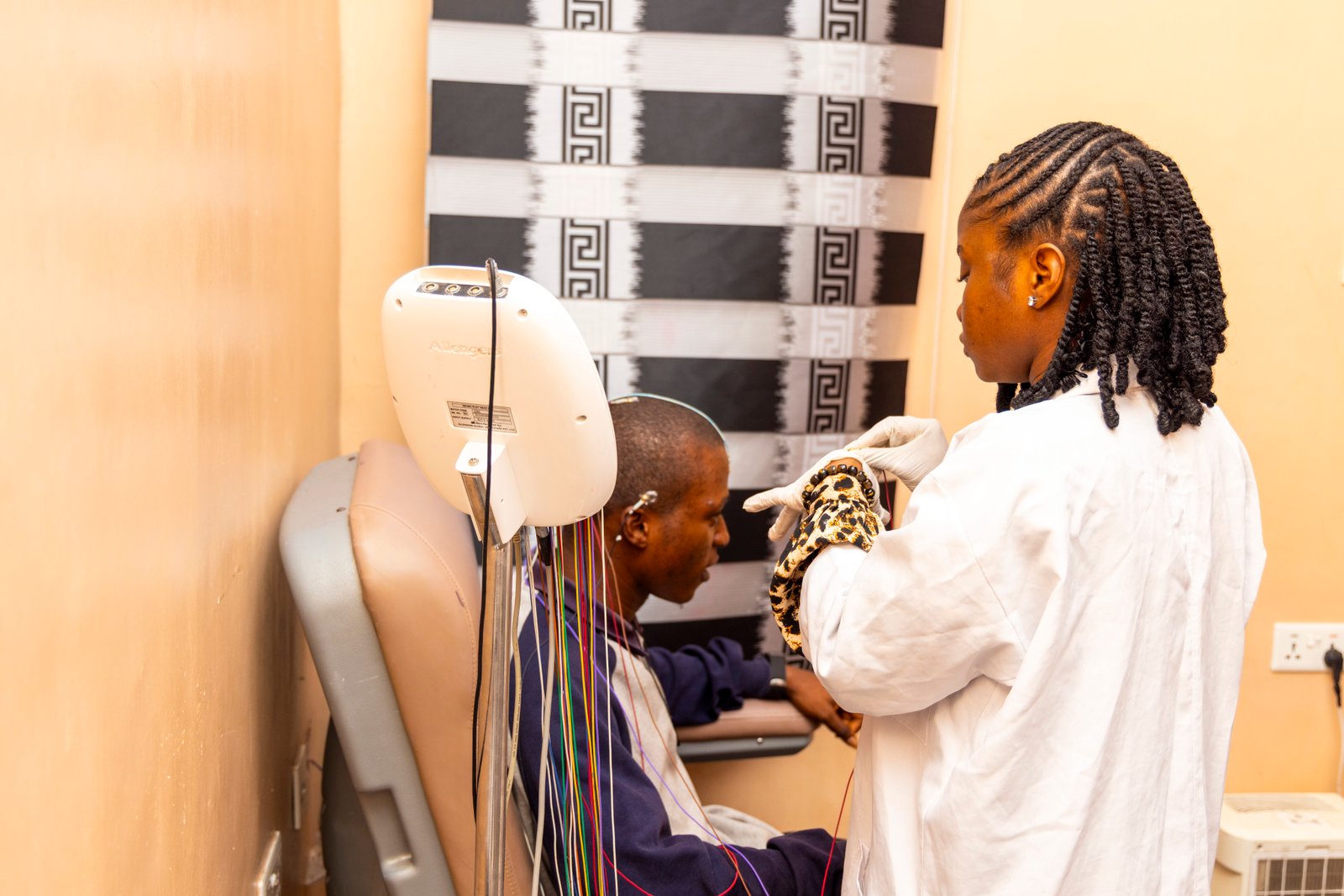
Electroencephalography (EEG) Services in Owerri
EEG Testing to Record and Evaluate the Brain’s Electrical Activity
The brain communicates through electrical activity, and changes in that activity can sometimes provide important information when investigating neurological symptoms and conditions.
At LifeWay Diagnostics, we provide Electroencephalography (EEG) services in Owerri to record the electrical activity of the brain and provide valuable information that can support neurological assessment.
An EEG is a non-invasive test that uses small electrodes placed on the scalp to detect and record the brain’s electrical signals.
Doctors may request an EEG when investigating symptoms such as seizures, unusual episodes of altered awareness, unexplained loss of consciousness or other neurological concerns.
If you have been referred for an EEG or have been advised to undergo neurological testing, LifeWay Diagnostics can help you access the appropriate diagnostic service in Owerri.
Need an EEG in Owerri? Contact LifeWay Diagnostics to enquire about an appointment and preparation requirements.
What Is an EEG?
Electroencephalography, commonly called an EEG, is a diagnostic test used to record the electrical activity of the brain.
During an EEG, small sensors called electrodes are placed on the scalp. These electrodes detect electrical activity produced by the brain and transmit the signals to an EEG recording system.
The resulting recording can be reviewed by an appropriately qualified healthcare professional as part of the assessment of neurological symptoms.
Unlike CT scans, MRI scans and X-rays, a standard EEG does not produce images of the physical structure of the brain.
Instead, it records brain electrical activity.
This makes EEG a different type of neurological investigation from structural brain imaging.
Why Might a Doctor Request an EEG?
An EEG may be requested when a doctor needs information about brain electrical activity.
One of the most common reasons for an EEG is the investigation of episodes that may represent seizures.
A healthcare professional may also request an EEG when investigating:
Seizures or suspected seizures
Unexplained episodes of loss of awareness
Unusual movements or behaviours
Episodes of staring or unresponsiveness
Certain unexplained blackouts
Some sleep-related neurological concerns
Changes in consciousness
Certain neurological conditions requiring monitoring
Other symptoms where assessment of brain electrical activity may be clinically useful
The reason for an EEG will depend on the individual patient’s symptoms, medical history and clinical assessment.
An EEG is not appropriate for every type of neurological symptom, so your doctor will determine whether the test is necessary.
What Does an EEG Measure?
An EEG measures electrical activity generated by the brain.
The recording contains patterns of electrical activity that change according to factors such as:
Wakefulness
Sleep
Age
Brain activity
Certain neurological conditions
Some medications and other clinical factors
The healthcare professional interpreting the EEG looks at the recorded patterns and considers them alongside the patient’s symptoms and medical history.
What Happens During an EEG?
An EEG is generally a straightforward and non-invasive examination.
Before the test begins, the healthcare professional may ask questions about your symptoms, medical history, medications and the reason for the examination.
The process usually involves the following:
1. Preparing the scalp
The scalp may be cleaned or prepared at specific points to help the electrodes make good contact with the skin.
2. Placing the electrodes
Small electrodes are positioned on the scalp.
The electrodes detect electrical signals from the brain but do not normally cause pain.
3. Connecting the electrodes
The electrodes are connected to the EEG recording equipment.
4. Recording brain activity
You may be asked to remain relaxed and still while the electrical activity of your brain is recorded.
Depending on the clinical request and examination protocol, you may be asked to:
Open and close your eyes
Relax quietly
Follow simple instructions
Perform certain breathing exercises
Look at or respond to specific stimuli
Sleep or attempt to sleep, if a sleep-related recording is required
Not every EEG includes all of these procedures.
5. Completing the recording
Once sufficient information has been obtained, the electrodes are removed and the examination is completed.
You can normally return to your usual activities afterwards unless your doctor or diagnostic team gives you different instructions.
Is an EEG Painful?
An EEG is generally painless.
The electrodes placed on your scalp are designed to record electrical activity rather than deliver electrical stimulation.
You may experience mild discomfort from the electrode preparation or from remaining in one position during the examination.
After the electrodes are removed, there may occasionally be some temporary residue from the materials used to attach them to the scalp.
How Long Does an EEG Take?
The duration of an EEG can vary depending on the type of examination and the reason it has been requested.
A routine EEG may take approximately 20 to 60 minutes, although the overall appointment may take longer because of preparation and electrode placement.
Some EEG examinations may require a longer recording period.
Your doctor or diagnostic team can provide specific information about the type of EEG you have been referred for.
How Should I Prepare for an EEG?
Preparation instructions can vary depending on the type of EEG being performed.
Unless you have been given different instructions, it can be helpful to:
Wash your hair before the appointment.
Avoid applying hair oils, grease, gels or heavy styling products before the test.
Take your regular medication as instructed by your doctor.
Eat normally unless you have specifically been instructed otherwise.
Bring relevant medical information or your referral where applicable.
Inform the healthcare professional about medications you are taking.
Follow any specific sleep instructions provided before the examination.
If you have been asked to have a sleep-deprived EEG, you will receive specific instructions regarding sleep before the appointment.
Do not stop taking prescribed medication simply because you are having an EEG unless your doctor specifically instructs you to do so.
What Should I Wear for an EEG?
Comfortable clothing is generally recommended.
Because electrodes need to be placed on the scalp, it is helpful to arrive with clean hair and without heavy hair products.
You should follow any specific instructions provided by the diagnostic team before your appointment.
Is an EEG Safe?
A standard EEG is a non-invasive test and is generally considered safe.
The electrodes record electrical activity from the scalp; they do not normally send electrical current into the brain.
Some EEG procedures may involve techniques designed to increase the likelihood of recording certain types of brain activity. If a particular procedure is planned, the healthcare professional will explain what you should expect.
If you have a medical condition or have previously experienced seizures, tell the healthcare professional before the examination.
Can Children Have an EEG?
Yes. EEGs may be performed in children when clinically indicated.
Because children may respond differently to the examination, the healthcare team may explain the procedure in age-appropriate language and help the child remain comfortable and relaxed.
Parents or guardians should provide relevant information about the child’s symptoms, medications, previous episodes and medical history where appropriate.
If a child has been referred for an EEG, follow the preparation instructions provided by the healthcare team.
What Can an EEG Help Investigate?
EEG testing may provide useful information when doctors are investigating several types of neurological symptoms.
Seizures
EEG is commonly used as part of the evaluation of people who have experienced seizures or episodes suspected to be seizures.
Certain abnormal electrical patterns may provide useful information to the healthcare professional interpreting the recording.
Unexplained Episodes
An EEG may be considered when someone experiences unusual episodes involving:
Loss of awareness
Staring
Unresponsiveness
Unusual movements
Changes in behaviour
Other unexplained events
The doctor will determine whether the episodes are likely to benefit from EEG investigation.
Sleep-Related Neurological Assessment
Depending on the clinical circumstances, EEG may be used to record brain activity during sleep or changes between wakefulness and sleep.
Does an Abnormal EEG Always Mean Epilepsy?
No.
An EEG result must be interpreted in the context of the patient’s symptoms, medical history and clinical examination.
Similarly, a normal EEG does not necessarily rule out epilepsy or every other neurological condition.
Brain electrical activity can vary, and some abnormalities may not occur during a particular recording.
For this reason, your doctor may consider the EEG alongside other investigations and clinical information before reaching a diagnosis.
EEG vs MRI: What Is the Difference?
EEG and MRI examine different aspects of the brain.
EEG
An EEG records the electrical activity of the brain.
It can be particularly useful when investigating certain seizure-related or neurological symptoms.
MRI
An MRI produces detailed images of the physical structure of the brain and surrounding tissues.
It can help doctors investigate structural abnormalities.
In some cases, a doctor may request both an EEG and an MRI because they provide different types of information.
EEG vs CT Scan: What Is the Difference?
A CT scan uses X-rays to create cross-sectional images of the body’s internal structures.
An EEG does not create structural images.
Instead, it records electrical activity from the brain.
The choice between EEG, CT, MRI or other investigations depends on the patient’s symptoms and the clinical question the doctor needs to answer.
Can I Drive After an EEG?
Whether you can drive after an EEG depends on your medical circumstances and, particularly, the reason the EEG was requested.
The EEG itself does not usually prevent someone from returning to normal activities.
However, if you have experienced seizures, loss of consciousness, unexplained blackouts or similar symptoms, your doctor may advise you about driving and other safety considerations.
Follow your doctor’s advice and applicable driving regulations.
What Happens After an EEG?
After the recording is completed, the electrodes are removed and the scalp may be cleaned.
The EEG recording is then reviewed and interpreted as part of the diagnostic process.
Your doctor may use the result alongside:
Your symptoms
Medical history
Neurological examination
Medication history
Previous investigations
MRI or CT findings where applicable
Other relevant clinical information
Depending on the arrangement for your examination, a report may be provided to your referring doctor or made available to you according to the centre’s reporting process.
Why Choose LifeWay Diagnostics for EEG Testing in Owerri?
At LifeWay Diagnostics, EEG forms part of our broader Clinical Physiology and diagnostic services.
Our goal is to make important diagnostic investigations accessible to patients in Owerri and surrounding communities while providing a professional environment for patients referred for neurological and other clinical assessments.
Our diagnostic approach focuses on:
Professional patient care
Appropriate diagnostic procedures
Modern diagnostic equipment
Support for doctor referrals
Convenient access to multiple diagnostic services
Clear communication throughout the examination process
Integration with other clinical diagnostic services
Whether you are referred by a neurologist, physician, paediatrician or another healthcare professional, our team can assist with your EEG appointment and provide information about the examination process.
EEG Services as Part of Clinical Physiology in Owerri
EEG is one of several investigations available within clinical physiology.
Depending on your clinical needs, your doctor may request other tests to investigate different systems of the body.
LifeWay Diagnostics’ broader Clinical Physiology services include:
Electrocardiography (ECG)
Records the electrical activity and rhythm of the heart.
Echocardiography
Uses ultrasound to examine the structure and function of the heart.
Spirometry
Assesses aspects of lung function and airflow.
Holter Monitoring
Provides longer-term monitoring of heart rhythm during normal daily activities.
Ambulatory Blood Pressure Monitoring
Records blood pressure at intervals over an extended period.
OCT
Provides detailed imaging of structures within the eye.
Explore our Clinical Physiology Services in Owerri to learn more about these investigations.
When Should You Seek Medical Attention?
If you experience a first seizure, prolonged seizure, repeated seizures without recovery, severe difficulty breathing, significant injury during a seizure, prolonged unconsciousness or another medical emergency, seek urgent medical care.
An EEG appointment should not replace urgent medical attention when someone is experiencing a potentially serious or life-threatening condition.
For non-emergency neurological concerns, speak with a qualified healthcare professional who can determine whether an EEG or another investigation is appropriate.
Frequently Asked Questions About EEG in Owerri
What is an EEG test?
An EEG, or electroencephalogram, is a test that records the electrical activity of the brain using small electrodes placed on the scalp.
Why would a doctor request an EEG?
An EEG may be requested when investigating seizures, suspected seizures, unexplained episodes of altered awareness, unusual movements or other neurological concerns.
Is an EEG painful?
No. An EEG is generally painless. The electrodes record brain activity and do not normally cause pain.
How long does an EEG take?
A routine EEG may take approximately 20 to 60 minutes, although the total appointment time can vary depending on preparation and the type of examination required.
Do I need to wash my hair before an EEG?
It is generally helpful to arrive with clean hair and without oils, gels or heavy styling products so that the electrodes can make good contact with the scalp.
Can I eat before an EEG?
For a routine EEG, you can generally eat normally unless your healthcare professional gives you different instructions.
Should I stop my medication before an EEG?
Do not stop prescribed medication unless your doctor specifically tells you to. Inform the healthcare professional about all medications you are taking.
Is EEG the same as a brain scan?
No. EEG records the brain’s electrical activity, while brain imaging tests such as MRI and CT create images of the brain’s physical structure.
Can an EEG diagnose epilepsy?
EEG can provide important information when epilepsy or seizures are being investigated, but the result must be interpreted alongside symptoms, medical history and other clinical information.
Can a normal EEG rule out epilepsy?
Not necessarily. A normal EEG does not automatically rule out epilepsy because abnormal electrical activity may not occur during the particular recording.
Can children undergo EEG testing?
Yes. EEG can be performed in children when clinically indicated.
Where can I get an EEG in Owerri?
LifeWay Diagnostics provides EEG and other Clinical Physiology services in Owerri. Contact the centre to confirm appointment availability and preparation requirements.
Book an EEG in Owerri
If your doctor has requested an EEG or you have been referred for neurological investigation, LifeWay Diagnostics can assist you with the examination.
Contact LifeWay Diagnostics to enquire about EEG testing in Owerri, confirm appointment requirements and get directions to the centre.