
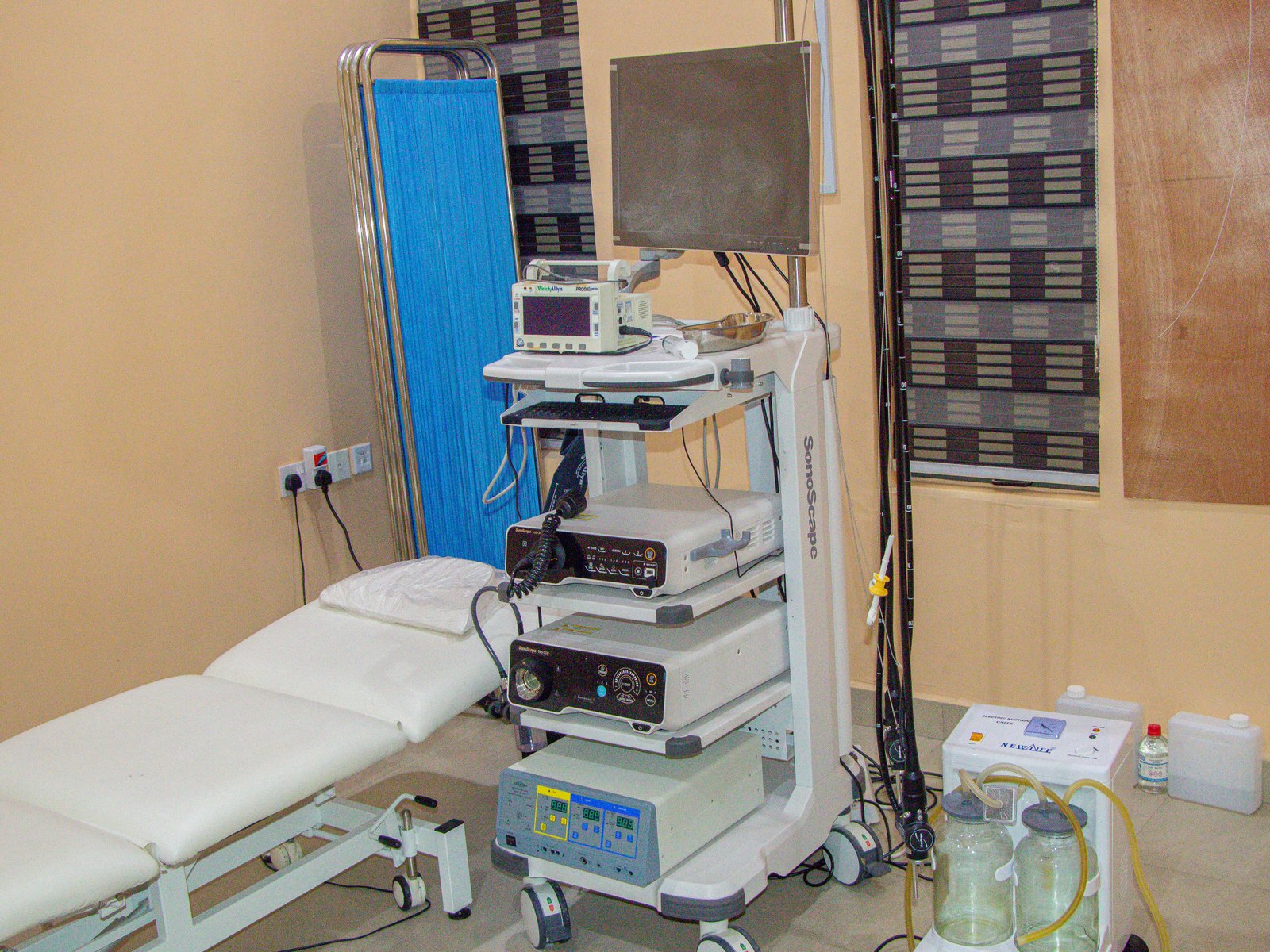
Endoscopy Services in Owerri
Professional Endoscopy Services for Detailed Examination of the Digestive Tract
Some digestive symptoms can persist even when routine tests do not provide the full picture. In such situations, your doctor may recommend an endoscopy to examine the inside of the digestive tract more closely.
At LifeWay Diagnostics in Owerri, endoscopy is part of our specialized Interventional Services, providing patients with access to procedures that can support the investigation of gastrointestinal symptoms and other clinical concerns.
Endoscopy allows a healthcare professional to examine internal structures using a specialized instrument called an endoscope, which has a light and camera attached to it.
Depending on the type of endoscopy being performed, the procedure may allow the clinician to examine areas of the digestive tract directly and identify changes that may require further medical attention.
If you have been referred for an endoscopy, our team can help you understand what the procedure involves, how to prepare and what to expect before and after your examination.
What Is Endoscopy?
Endoscopy is a medical procedure that allows a healthcare professional to look inside parts of the body using a specialized instrument called an endoscope.
An endoscope is a thin, flexible or rigid instrument that may contain:
A light source
A small camera
Imaging capabilities
A channel through which certain instruments may be passed when clinically required
For gastrointestinal examinations, an endoscope allows the clinician to view areas of the digestive tract that cannot be adequately assessed through an external examination.
The exact type of endoscopy depends on the symptoms being investigated and the part of the digestive system that needs to be examined.
What Can an Endoscopy Examine?
Depending on the type of procedure, endoscopy can be used to examine different parts of the digestive tract.
One commonly performed examination is an upper gastrointestinal endoscopy, which may allow a clinician to examine the:
Oesophagus
Stomach
Duodenum
The appropriate examination is determined by the patient’s symptoms, medical history and clinical assessment.
If your doctor has referred you for an endoscopy, you should receive specific information about the type of procedure being planned.
Why Might a Doctor Recommend an Endoscopy?
There are many reasons why a doctor may recommend an endoscopy.
It may be considered when a patient has persistent or unexplained digestive symptoms or when additional information is needed following other examinations.
Depending on the clinical situation, an endoscopy may be recommended for symptoms such as:
Persistent upper abdominal pain
Recurrent indigestion
Persistent heartburn
Difficulty swallowing
Pain when swallowing
Persistent nausea
Recurrent vomiting
Unexplained weight loss
Suspected gastrointestinal bleeding
Persistent gastrointestinal discomfort
Other symptoms requiring direct examination of the digestive tract
An endoscopy does not automatically mean that a serious condition is suspected.
In many cases, it is recommended because direct visualization can provide information that may not be available from symptoms, blood tests or imaging alone.
Conditions That May Be Investigated With Endoscopy
Depending on the patient’s symptoms and clinical circumstances, endoscopy may help a doctor investigate or evaluate conditions affecting the upper digestive tract.
These may include:
Gastritis
Peptic ulcer disease
Reflux-related changes
Inflammation
Oesophageal abnormalities
Stomach abnormalities
Duodenal abnormalities
Sources of gastrointestinal bleeding
Other structural changes
An endoscopy does not by itself establish every diagnosis. Findings need to be interpreted by an appropriately qualified healthcare professional together with the patient’s symptoms, medical history and other investigations.
Endoscopy for Persistent Digestive Symptoms
Digestive symptoms are common and may have many possible causes.
For example, persistent heartburn may be associated with reflux, while abdominal discomfort may have several possible explanations.
When symptoms continue, recur or require further investigation, your doctor may recommend endoscopy to obtain a closer look at the relevant part of the digestive tract.
The purpose is not simply to perform a procedure, but to obtain information that can contribute to a more complete clinical assessment.
What Happens During an Endoscopy?
Your healthcare team will explain the procedure before it begins.
While the exact process depends on the type of endoscopy, a typical upper gastrointestinal endoscopy may involve the following steps.
1. Pre-Procedure Assessment
The healthcare team may ask about:
Your symptoms
Medical history
Current medications
Allergies
Previous procedures
Previous reactions to sedation or medicines
Other relevant health information
This information helps the team prepare appropriately for the procedure.
2. Preparation
You will be given instructions regarding fasting and other preparation requirements.
It is important to follow these instructions carefully.
3. Positioning
You will be positioned appropriately for the examination.
The healthcare team will explain what is happening and help you remain as comfortable as possible.
4. Sedation or Local Anaesthetic
Depending on the procedure and clinical arrangements, medication may be used to improve comfort.
This may involve sedation and/or local anaesthetic.
Your healthcare professional will explain what is appropriate for your examination.
5. Introduction of the Endoscope
For an upper gastrointestinal endoscopy, the endoscope is carefully passed through the mouth and into the upper digestive tract.
The camera allows the healthcare professional to view the relevant structures on a monitor.
6. Examination
The clinician examines the lining of the digestive tract for abnormalities or changes that may require further assessment.
If clinically appropriate, additional procedures such as taking a small tissue sample for laboratory examination may be performed.
7. Completion
The endoscope is carefully removed after the examination is completed.
You may then be taken to an observation area if sedation has been used.
Is Endoscopy Painful?
People often worry about whether an endoscopy will be painful.
The experience varies from person to person and depends on the type of endoscopy, the individual and whether sedation or local anaesthetic is used.
You may experience temporary sensations such as:
Pressure
Gagging
Bloating
A feeling of fullness
Mild throat discomfort after an upper endoscopy
Sedation may be used where appropriate to improve comfort during certain procedures.
If you are worried about discomfort or anxiety, discuss this with the healthcare team before the procedure.
Does Endoscopy Require Sedation?
Sedation requirements vary depending on the type of procedure and clinical circumstances.
For some examinations, medication may be used to help you relax and remain comfortable.
The healthcare professional performing the procedure will explain whether sedation or local anaesthetic is planned and what you should expect.
If sedation is used, you may need someone to accompany you home afterwards and may be advised not to drive, operate machinery or make important decisions for a specified period.
Follow the instructions provided by your healthcare team.
How Should I Prepare for an Endoscopy?
Preparation depends on the type of endoscopy being performed.
For an upper gastrointestinal endoscopy, you will generally be given instructions about fasting before the examination so that the healthcare professional can obtain a clear view of the relevant structures.
You may also be asked to provide information about:
Prescription medications
Over-the-counter medicines
Blood-thinning medication
Diabetes medication
Allergies
Existing medical conditions
Previous reactions to sedation or anaesthesia
Do not stop taking prescribed medication unless your doctor or healthcare professional specifically tells you to do so.
If you are unsure about any preparation instruction, contact the healthcare team before your appointment.
What Should I Bring to My Endoscopy Appointment?
Where applicable, it can be helpful to bring:
Your referral or appointment information
Previous relevant medical reports
Previous imaging or laboratory results
A list of your current medications
Information about known allergies
Any other documents requested by the healthcare team
If sedation is planned, arrange transportation according to the instructions provided by the medical team.
How Long Does an Endoscopy Take?
The actual examination may be relatively brief, but the total appointment can take longer.
Time may be required for:
Registration
Pre-procedure assessment
Preparation
Sedation, where applicable
The examination
Recovery and observation
The exact duration depends on the type of endoscopy and whether additional procedures are performed.
Your healthcare team can provide more specific information about your appointment.
Can Tissue Samples Be Taken During an Endoscopy?
In some circumstances, a healthcare professional may take a small tissue sample, known as a biopsy, during an endoscopic examination.
A biopsy may be taken when further laboratory examination of tissue is clinically appropriate.
Taking a biopsy does not necessarily mean that cancer is suspected. Tissue samples can be used for several diagnostic purposes depending on the clinical situation.
If a biopsy is taken, the sample may be sent to a laboratory for appropriate analysis.
What Happens After an Endoscopy?
After the procedure, you may be observed for a period of time, particularly if sedation has been used.
Some people experience temporary symptoms such as:
Mild throat discomfort
Bloating
Feeling tired
Mild abdominal discomfort
These symptoms may settle after the procedure.
If sedation has been used, follow the instructions given to you regarding driving, work, alcohol, machinery and other activities.
Your healthcare professional will also explain when and how you should receive or discuss your results.
When Can I Return to Normal Activities?
This depends on the type of endoscopy and whether sedation or another medication has been used.
Some patients can return to normal activities relatively quickly, while others may need to rest for the remainder of the day.
If you receive sedation, you should follow the specific recovery instructions given by your healthcare team.
Are There Risks Associated With Endoscopy?
Endoscopy is commonly performed, but like any medical procedure, it can have potential risks.
The risks vary depending on the type of endoscopy and any additional procedure performed.
Possible complications can include:
Bleeding
Infection
Reaction to medication or sedation
Injury to internal structures
Perforation, although uncommon
Your healthcare professional should explain the relevant risks and benefits before the procedure.
The potential risks may also be influenced by your individual medical history and the specific procedure being performed.
When Should I Seek Medical Attention After Endoscopy?
Contact a healthcare professional or seek urgent medical attention if you develop concerning symptoms after an endoscopy, particularly if they are severe or worsening.
These may include:
Severe or worsening abdominal or chest pain
Significant bleeding
Vomiting blood
Difficulty breathing
Severe dizziness or fainting
Persistent vomiting
High fever
Severe difficulty swallowing
Other serious or unexpected symptoms
If you are concerned about a symptom after your procedure, do not ignore it. Seek appropriate medical advice.
Endoscopy vs Other Diagnostic Tests
Different diagnostic tests provide different types of information.
Endoscopy vs Ultrasound
An ultrasound uses sound waves to produce images of structures within the body.
Endoscopy allows direct visual examination of the inside of certain parts of the digestive tract.
Depending on the clinical problem, either test or both may be appropriate.
Endoscopy vs CT Scan
A CT scan creates cross-sectional images of the body using X-rays.
Endoscopy provides direct visual examination of the internal lining of the relevant digestive tract.
They answer different clinical questions and may sometimes be used together.
Endoscopy vs MRI
MRI uses magnetic fields and radio waves to produce detailed images of internal structures.
Endoscopy provides direct visual examination of the inside of certain hollow organs.
The appropriate investigation depends on the symptoms and the clinical question being addressed.
Endoscopy vs Blood Tests
Blood tests provide information about various aspects of health and disease.
They cannot provide the same direct visual information that an endoscopic examination can provide.
Your doctor may recommend several investigations depending on your symptoms.
Endoscopy and Laboratory Testing
In some cases, an endoscopic procedure may involve obtaining a tissue sample for laboratory examination.
This creates an important connection between endoscopy and pathology services.
Where a biopsy is clinically required, the tissue can be examined using appropriate laboratory techniques to help healthcare professionals understand the nature of the tissue changes.
LifeWay Diagnostics also provides specialized laboratory services including:
Histopathology
Medical Biochemistry
Microbiology
Hematology
Molecular Biology
This integrated diagnostic environment can support a more complete investigation when multiple forms of testing are clinically required.
Why Choose LifeWay Diagnostics for Endoscopy in Owerri?
Patient-Focused Care
We understand that undergoing an endoscopy can feel unfamiliar or stressful.
Our goal is to provide clear information and guide you through the relevant stages of your appointment.
Specialized Diagnostic Services
Endoscopy is part of LifeWay Diagnostics’ broader Interventional Services, alongside Nasendoscopy and Hemodialysis.
Integrated Diagnostics
LifeWay Diagnostics also provides laboratory, imaging and clinical physiology services, allowing patients and referring healthcare professionals to access different diagnostic services within one centre where appropriate.
Clear Communication
We believe patients should understand what a procedure is intended to investigate, how to prepare and what to expect afterwards.
Convenient Access in Owerri
LifeWay Diagnostics serves patients in Owerri and surrounding communities who require specialized diagnostic and clinical services.
Who Can Be Referred for Endoscopy?
Endoscopy may be recommended for:
Patients with persistent digestive symptoms
Patients requiring further investigation after other tests
Patients with unexplained gastrointestinal symptoms
Patients requiring examination of the upper digestive tract
Patients requiring follow-up of a previously identified condition
Patients requiring tissue sampling where clinically indicated
The decision to perform an endoscopy should be based on an appropriate clinical assessment.
Frequently Asked Questions About Endoscopy in Owerri
What is an endoscopy?
Endoscopy is a medical procedure that uses a specialized instrument called an endoscope to examine the inside of parts of the body. Gastrointestinal endoscopy can be used to examine areas of the digestive tract.
What does an upper endoscopy examine?
An upper gastrointestinal endoscopy can allow a healthcare professional to examine the oesophagus, stomach and duodenum.
Why would I need an endoscopy?
An endoscopy may be recommended to investigate persistent digestive symptoms, examine the digestive tract more closely, investigate suspected abnormalities or obtain additional information needed for clinical management.
Is an endoscopy painful?
The experience varies. You may experience pressure, gagging or temporary discomfort, but medication such as sedation or local anaesthetic may be used depending on the procedure and clinical circumstances.
Do I need to fast before an endoscopy?
For many upper gastrointestinal endoscopies, fasting is required. You will receive specific instructions before your appointment.
Can I take my regular medication before an endoscopy?
Medication instructions vary. Tell the healthcare team about all medications you take and follow the instructions they provide. Do not stop prescribed medication without professional advice.
Can a biopsy be taken during endoscopy?
Yes, when clinically appropriate, a small tissue sample may be taken for laboratory examination.
Does taking a biopsy mean I have cancer?
No. A biopsy can be performed for many diagnostic reasons. The purpose is to allow tissue to be examined more closely.
How long does an endoscopy take?
The procedure itself may be relatively short, but the complete appointment can take longer because of preparation, sedation where applicable and recovery.
Can I drive home after an endoscopy?
If you have received sedation, you may be advised not to drive afterwards. Follow the instructions provided by your healthcare team and arrange transportation when required.
Can endoscopy detect ulcers?
Endoscopy can allow a healthcare professional to directly examine the upper digestive tract and may identify abnormalities such as ulcers. The findings must be interpreted in the context of your clinical history.
Can endoscopy detect cancer?
An endoscopic examination can identify suspicious abnormalities, and a biopsy may be taken when appropriate. A diagnosis of cancer requires appropriate clinical and pathological evaluation.
Do I need a doctor’s referral for endoscopy?
Referral requirements can vary depending on the clinical situation and service arrangements. Contact LifeWay Diagnostics if you are unsure whether you need a referral.
Looking for Endoscopy Services in Owerri?
If your doctor has recommended an endoscopy or you need further investigation of persistent digestive symptoms, LifeWay Diagnostics in Owerri provides specialized diagnostic and interventional services to support your healthcare journey.
Before your appointment, our team can provide information about the procedure, preparation requirements and next steps.