
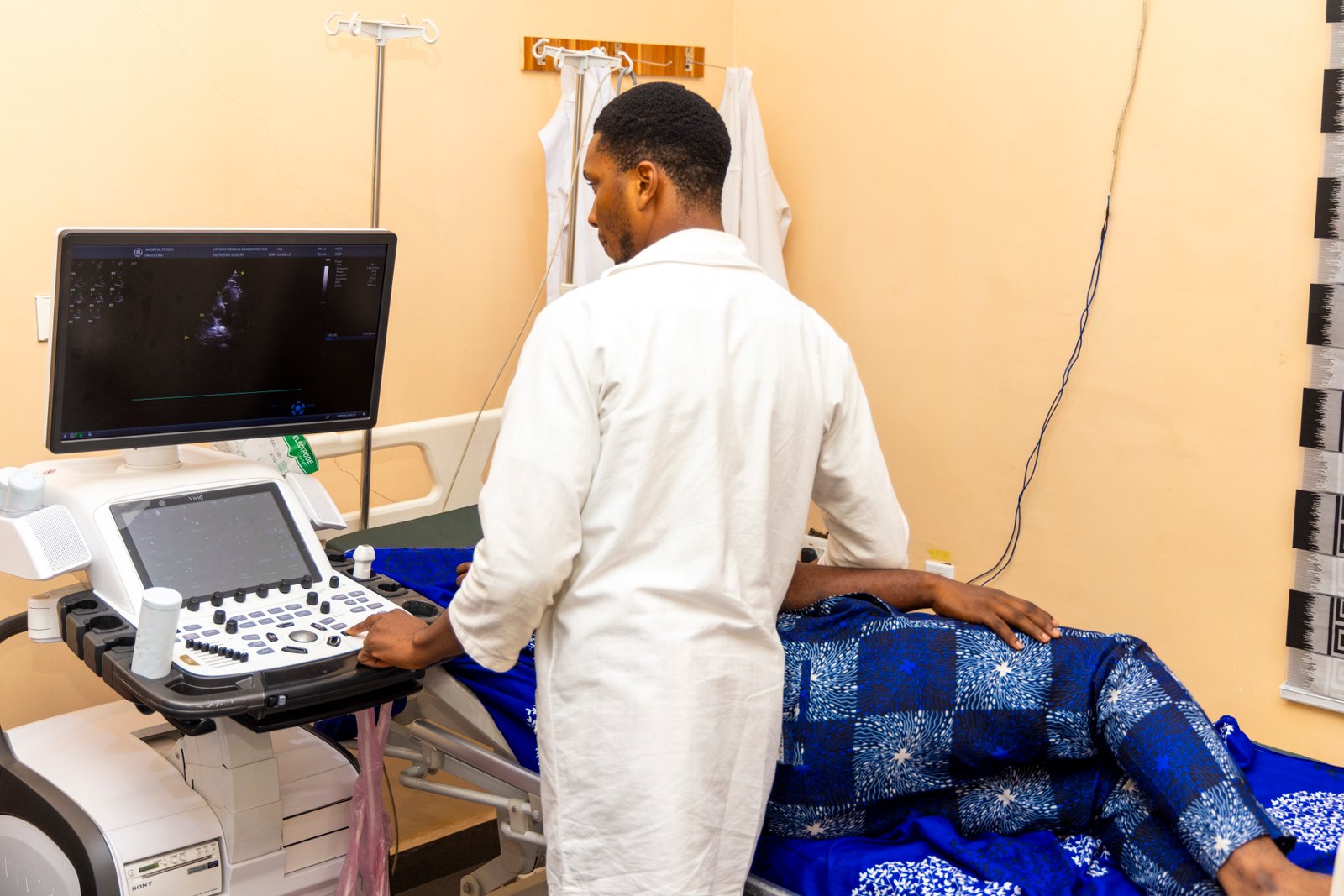
Electrocardiography (ECG) in Owerri
Professional ECG Testing for Heart Rhythm and Electrical Activity
Your heart beats continuously, but you cannot always tell whether its rhythm and electrical activity are functioning normally.
An Electrocardiogram (ECG) is a simple, non-invasive test that records the electrical activity of your heart. It can provide important information about your heart rate and rhythm and may help healthcare professionals investigate certain heart-related symptoms.
At LifeWay Diagnostics in Owerri, we provide professional ECG testing for patients referred by doctors, clinics, hospitals and other healthcare providers, as well as appropriate cardiac assessments based on individual clinical needs.
Whether you have been experiencing palpitations, chest discomfort, dizziness, shortness of breath or other symptoms, or your doctor has requested an ECG as part of a medical assessment, our team can guide you through the examination.
Looking for an ECG test in Owerri? Contact LifeWay Diagnostics to make an enquiry or schedule your examination.
What Is an ECG?
An electrocardiogram, commonly shortened to ECG, is a test that records the electrical signals produced by your heart.
Your heart uses electrical signals to coordinate each heartbeat. These signals cause the heart muscle to contract and pump blood around the body.
An ECG detects these electrical signals through small electrodes placed on the skin.
The electrical activity is displayed as a waveform or tracing that can be reviewed by an appropriately trained healthcare professional.
An ECG can provide information about:
Heart rate
Heart rhythm
The timing of electrical activity through the heart
Certain patterns that may suggest a cardiac problem
Changes that may require further medical assessment
An ECG is not a complete assessment of every aspect of heart health. Depending on your symptoms and medical history, your doctor may recommend additional investigations such as Echocardiography, Holter Monitoring or other cardiac tests.
Why Might You Need an ECG?
Doctors may request an ECG for many different reasons.
An ECG may be considered when a patient has symptoms such as:
Palpitations
You may feel that your heart is:
Racing
Beating unusually fast
Skipping beats
Fluttering
Beating irregularly
Pounding in your chest
An ECG may provide useful information about your heart rhythm.
Chest Discomfort
Chest discomfort can have many possible causes.
When a doctor is evaluating chest symptoms, an ECG may form part of the medical assessment.
If you are experiencing sudden, severe or persistent chest pain, especially when accompanied by difficulty breathing, sweating, fainting or other concerning symptoms, seek urgent medical attention rather than waiting for a routine diagnostic appointment.
Dizziness or Fainting
Some heart rhythm problems can be associated with dizziness or episodes of fainting.
Your doctor may recommend an ECG as part of the investigation.
Shortness of Breath
An ECG may be included in the assessment of certain patients experiencing unexplained or persistent shortness of breath.
Abnormal Heartbeat
If a healthcare professional detects an irregular heartbeat or other concern during a physical examination, an ECG may provide additional information.
Medical Monitoring
Patients with known heart conditions may require ECG testing as part of ongoing monitoring.
Before Certain Procedures
An ECG may sometimes be requested before a medical procedure or operation, depending on the patient’s age, medical history and the requirements of the healthcare team.
What Does an ECG Measure?
An ECG records the electrical activity associated with each heartbeat.
Depending on the type of ECG and clinical circumstances, it can provide information about:
Heart Rate
The ECG can show how fast the heart is beating during the recording.
Heart Rhythm
It can show whether the heart rhythm appears regular or irregular during the period recorded.
Electrical Conduction
The tracing can provide information about how electrical signals travel through different parts of the heart.
Electrical Patterns
Certain patterns on an ECG may provide clues that lead a doctor to request further assessment.
It is important to remember that an ECG is interpreted within the context of the patient’s symptoms, medical history and other findings.
What Happens During an ECG at LifeWay Diagnostics?
An ECG is generally a quick and straightforward examination.
Step 1: Registration
When you arrive at LifeWay Diagnostics, our team will confirm your details and the examination requested.
If you were referred by a doctor, bring your referral or request where applicable.
Step 2: Preparation
You may be asked to remove certain clothing from the upper body so that the electrodes can be positioned correctly.
You may also be asked to remove items that could interfere with the examination.
Step 3: Positioning
You will normally lie comfortably on an examination bed.
The healthcare professional will explain what will happen before starting the recording.
Step 4: Electrode Placement
Small adhesive electrodes are placed on specific areas of your chest and limbs.
These electrodes detect the electrical signals generated by your heart.
The electrodes are connected to the ECG machine using leads.
Step 5: Recording
You will be asked to remain still and relaxed while the ECG records your heart’s electrical activity.
You may be asked to breathe normally and avoid talking or moving during the short recording.
Step 6: Examination Completion
Once the recording is complete, the electrodes are removed.
The ECG tracing can then be reviewed and processed as part of your diagnostic assessment.
Is an ECG Painful?
No, an ECG is generally painless.
The electrodes are placed on the surface of your skin and record electrical signals from your heart.
The ECG machine does not normally send electricity into your body during a standard ECG recording.
Some people may experience minor discomfort when adhesive electrodes are removed, particularly if they have sensitive skin or body hair.
If you have sensitive skin or are concerned about the procedure, let the healthcare professional know.
How Long Does an ECG Take?
A standard resting ECG is usually a relatively quick examination.
The actual recording may only take a few minutes.
However, your total time at LifeWay Diagnostics can vary depending on:
Registration
Preparation
Electrode placement
The type of ECG requested
Whether additional recordings are required
Your individual circumstances
Our team will guide you through the process.
How Should I Prepare for an ECG?
A standard resting ECG usually requires little preparation.
However, a few simple steps can help make the examination easier.
Before Your ECG:
Wear comfortable clothing.
Avoid applying excessive body lotion or oils to the chest area before the examination.
Follow any specific instructions provided by your doctor or healthcare professional.
Bring your doctor’s referral or request if applicable.
Inform the healthcare professional about any relevant medications or medical conditions.
You should generally continue your prescribed medications unless your doctor specifically tells you otherwise.
What Should I Wear for an ECG?
Wear clothing that allows easy access to the chest and limbs.
You may need to remove or adjust your upper clothing so that the electrodes can be positioned correctly.
Avoid excessive creams or oils on the skin because they may interfere with electrode contact.
ECG for Men and Women
An ECG can be performed on both men and women.
The examination is generally the same, although electrode positioning and preparation may require appropriate consideration based on the individual patient.
If you have concerns about privacy or feel uncomfortable during the examination, communicate this to our healthcare team.
We aim to provide a professional and respectful environment throughout the procedure.
What Can an ECG Detect?
An ECG can provide information that may help healthcare professionals identify or investigate certain abnormalities involving the heart’s electrical activity.
Depending on the circumstances, an ECG may provide clues associated with:
Abnormal heart rhythms
Fast heart rates
Slow heart rates
Certain conduction abnormalities
Some patterns associated with heart conditions
Changes that may require additional investigation
However, an ECG cannot detect every heart condition.
A normal ECG also does not necessarily mean that every aspect of heart health is normal.
This is why your doctor may combine an ECG with other investigations.
ECG and Heart Rhythm Problems
Some heart rhythm abnormalities happen continuously, while others occur only occasionally.
A standard ECG records the heart’s electrical activity for a short period.
If your symptoms are intermittent and do not occur during the ECG, your doctor may recommend longer-term monitoring.
This may include:
Holter Monitoring
A Holter monitor is a portable device that records your heart rhythm for an extended period while you continue many of your normal activities.
This can be useful when symptoms such as palpitations, dizziness or irregular heartbeats occur from time to time.
ECG vs Echocardiogram
ECG and echocardiography are both used in cardiac assessment, but they provide different types of information.
ECG
An ECG records the electrical activity of the heart.
It is particularly useful for assessing heart rate, rhythm and electrical conduction.
Echocardiogram
An echocardiogram uses ultrasound to produce images of the heart.
It can provide information about the heart chambers, valves, movement of the heart muscle and certain aspects of heart function.
Your doctor may request one or both examinations depending on what they need to investigate.
ECG vs Holter Monitoring
A standard ECG and a Holter monitor both record electrical activity from the heart, but the duration is different.
Standard ECG
A standard ECG provides a short recording, usually while you are at the diagnostic centre.
Holter Monitor
A Holter monitor records your heart rhythm over a longer period while you go about your daily activities.
If your symptoms come and go, your doctor may determine that longer monitoring is appropriate.
When Should You Consider an ECG?
You should discuss your symptoms with a healthcare professional if you experience unexplained:
Heart palpitations
Racing heartbeat
Irregular heartbeat
Dizziness
Fainting
Chest discomfort
Shortness of breath
Unusual fatigue
Your doctor will determine whether an ECG or another investigation is appropriate.
Do not attempt to diagnose yourself based on symptoms alone.
ECG and Chest Pain
An ECG can form an important part of the medical evaluation of chest pain.
However, chest pain can have many different causes, including conditions that require urgent medical attention.
If you are experiencing new, severe or persistent chest pain, particularly if it is associated with difficulty breathing, fainting, heavy sweating, nausea or pain spreading to other parts of the body, seek urgent medical care.
Do not delay emergency evaluation simply to arrange a routine ECG appointment.
What Happens After an ECG?
Once the ECG recording is completed, the tracing is reviewed as part of your medical assessment.
Depending on the arrangement and referral, the result may be provided to your doctor or healthcare provider.
Your doctor may consider the ECG alongside:
Your symptoms
Medical history
Physical examination
Blood pressure
Previous ECGs
Laboratory results
Echocardiography
Holter monitoring
Other diagnostic investigations
If the ECG shows a finding that requires additional investigation, your doctor may recommend further testing.
Does a Normal ECG Mean My Heart Is Completely Healthy?
Not necessarily.
An ECG provides valuable information about the electrical activity of the heart during the period it is recorded.
However, it does not provide a complete picture of every aspect of heart health.
For example, some heart rhythm problems may occur only occasionally and may not appear during a short ECG.
Similarly, some structural heart problems require imaging such as an echocardiogram.
Your doctor will determine whether additional testing is necessary based on your individual circumstances.
ECG for Routine Medical Assessment
ECG testing may sometimes be requested even when a patient does not have obvious heart symptoms.
Depending on the person’s age, medical history and clinical circumstances, a healthcare provider may request an ECG as part of a broader medical evaluation.
Whether an ECG is appropriate for routine assessment should be determined by a qualified healthcare professional.
ECG for Patients Referred by Doctors and Hospitals
LifeWay Diagnostics provides diagnostic support for patients referred by:
General practitioners
Cardiologists
Hospitals
Clinics
Medical centres
Other healthcare providers
If you have been referred for an ECG, bring your request or referral and any relevant previous results where available.
Providing appropriate clinical information can help ensure that the requested investigation is performed correctly.
Why Choose LifeWay Diagnostics for ECG in Owerri?
At LifeWay Diagnostics, we understand that patients want more than just a test result.
They want to know what the examination involves, what they need to do and where to turn if they have questions.
Patient-Focused Service
Our team guides you through the ECG process and explains what you need to know before the examination.
Professional Diagnostic Environment
ECG testing is provided as part of a broader diagnostic service environment.
Support for Doctors
We support doctors, clinics and hospitals with appropriate diagnostic investigations for their patients.
Convenient Access in Owerri
Patients in Owerri and surrounding communities can access ECG testing alongside other diagnostic services.
Integrated Cardiac Assessment
If further cardiac investigation is required, LifeWay Diagnostics also provides other relevant diagnostic services, including echocardiography, Holter monitoring and ambulatory blood pressure monitoring.
Other Cardiac Diagnostic Services
Depending on your clinical needs, LifeWay Diagnostics provides access to several cardiac investigations.
Echocardiography
Ultrasound imaging used to assess the structure and function of the heart.
Holter Monitoring
Extended recording of heart rhythm using a portable monitor.
Ambulatory Blood Pressure Monitoring
Repeated blood pressure measurements taken over an extended period while you carry out normal activities.
These investigations are different from a standard ECG and should be performed when clinically appropriate.
Clinical Physiology Services at LifeWay Diagnostics
ECG is part of our broader Clinical Physiology service.
Other investigations include:
Echocardiography
Electroencephalography (EEG)
Spirometry
Holter Monitoring
Ambulatory Blood Pressure Monitoring
Optical Coherence Tomography (OCT)
Our Clinical Physiology service is designed to provide functional diagnostic investigations that support the assessment and monitoring of different body systems.
Other Diagnostic Services
LifeWay Diagnostics also provides a range of diagnostic services beyond Clinical Physiology.
Laboratory Services
Hematology
Medical Biochemistry
Microbiology
Histopathology
Molecular Biology
Radiology and Medical Imaging
X-Ray
MRI
CT Scan
Ultrasound
Mammography
Health Screening
Appropriate health screening and diagnostic assessment services.
Intervention and Specialist Services
Endoscopy
Nasendoscopy
Hemodialysis
Frequently Asked Questions About ECG
Where can I do an ECG in Owerri?
You can access ECG testing at LifeWay Diagnostics in Owerri, Imo State. If your doctor has requested an ECG, bring the referral or request where applicable.
What does an ECG test show?
An ECG records the electrical activity of your heart. It can provide information about heart rate, rhythm and electrical conduction and may identify patterns that require further medical assessment.
Is an ECG painful?
An ECG is generally painless. Small electrodes are attached to the skin to record the heart’s electrical activity.
How long does an ECG take?
The recording itself is usually completed within a few minutes. The total appointment time may vary depending on preparation and the type of examination.
Can I eat before an ECG?
A standard ECG generally does not require fasting. Unless your doctor or healthcare provider gives you different instructions, you can usually follow your normal routine.
Can I take my medication before an ECG?
Do not stop prescribed medication simply because you are having an ECG unless your doctor has specifically instructed you to do so.
Tell the healthcare professional about the medications you are taking.
Do I need a doctor’s referral for an ECG?
Requirements may vary depending on the circumstances. If your doctor has recommended an ECG, bring your referral or request with you.
What is the difference between ECG and Echo?
An ECG records the electrical activity of the heart. An echocardiogram uses ultrasound to produce images of the heart and assess its structure and function.
What if my ECG is abnormal?
An abnormal ECG does not by itself establish a final diagnosis. Your doctor may review the tracing alongside your symptoms and medical history and may recommend additional tests.
Can an ECG detect all heart problems?
No. An ECG is an important cardiac investigation, but it does not assess every aspect of heart health. Depending on your symptoms, your doctor may recommend echocardiography, Holter monitoring, blood tests or other investigations.
Can I have an ECG if I have a pacemaker?
An ECG can be performed in people with pacemakers, but inform the healthcare professional about your pacemaker before the examination.
Can an ECG detect an irregular heartbeat?
An ECG can record an irregular heart rhythm if it occurs during the recording. If the irregularity occurs only occasionally, your doctor may recommend longer-term monitoring such as Holter monitoring.
Book an ECG in Owerri
If your doctor has recommended an ECG or you need cardiac assessment for symptoms such as palpitations, dizziness or an irregular heartbeat, LifeWay Diagnostics is available to assist you.
Our ECG service is designed to make cardiac testing straightforward, professional and patient-focused.
Patient-focused service