
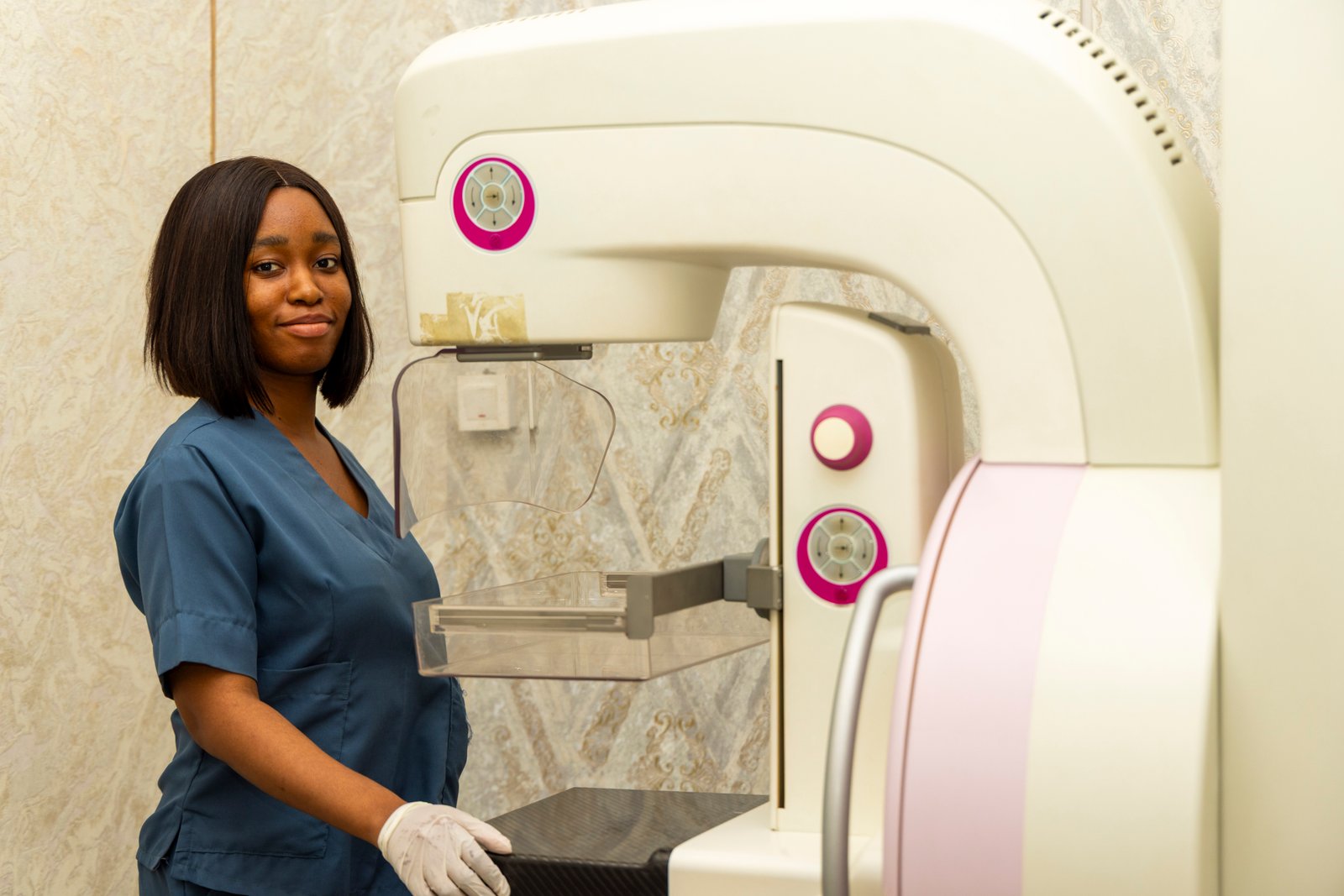
Mammography Services in Owerri
Professional Mammography Screening and Breast Imaging in Owerri
Breast health deserves attention at every stage of life. Mammography is one of the important imaging examinations used to examine breast tissue and help healthcare professionals identify changes that may require further evaluation.
At LifeWay Diagnostics in Owerri, we provide professional mammography services for women who have been referred for breast imaging, require further investigation of breast symptoms, or are undergoing breast health assessment as recommended by their healthcare provider.
Our approach is patient-focused. We understand that having a breast examination can sometimes feel uncomfortable or stressful, especially when you are being investigated for a breast concern. Our team is committed to providing a respectful, professional and supportive environment throughout the examination.
If you have been advised to have a mammogram, our diagnostic team can guide you through what to expect and help make the process as straightforward as possible.
Looking for mammography services in Owerri? Contact LifeWay Diagnostics to make an enquiry or schedule your examination.
What Is Mammography?
Mammography is a specialized form of X-ray imaging used to examine the breasts.
During a mammogram, a specialized mammography machine produces detailed images of the breast tissue. The images can help healthcare professionals identify certain changes or abnormalities within the breast that may require further assessment.
Mammography can be used for different clinical purposes, including breast screening and investigating breast symptoms.
It is important to understand that a mammogram is an imaging examination, not a diagnosis by itself. If an area of concern is identified, your doctor may recommend additional tests or examinations to determine what the finding means.
Why Is Mammography Important?
Breast changes are not always noticeable through physical examination alone.
Some abnormalities may develop without causing pain, a lump or other obvious symptoms. Mammography can provide images that allow healthcare professionals to examine breast tissue more closely.
Depending on the reason for the examination, mammography may help identify findings such as:
Breast masses or lumps
Certain types of calcifications
Changes in breast tissue
Asymmetry between areas of the breasts
Other abnormalities that may require further investigation
Early identification of an abnormal finding can allow a healthcare professional to recommend appropriate follow-up.
However, not every abnormal finding is cancer. Many breast changes are benign or may require additional investigation before their significance can be established.
Screening Mammography
Screening mammography is performed in women who may not have noticeable breast symptoms, depending on their age, risk factors and the recommendations of their healthcare provider.
The purpose of screening is to look for breast changes that may not yet be apparent through symptoms or physical examination.
The appropriate timing and frequency of screening can vary from one woman to another.
Factors such as:
Age
Personal medical history
Family history
Previous breast findings
Genetic or other risk factors
Previous mammogram results
may influence your healthcare provider’s recommendation.
If you are unsure whether mammography is appropriate for you, speak with your doctor or healthcare professional.
Diagnostic Mammography
Diagnostic mammography is used when a woman has a breast symptom, an abnormal clinical examination or a previous imaging finding that requires further evaluation.
Your doctor may recommend diagnostic breast imaging if you notice or experience changes such as:
A new breast lump
A change in the size or shape of the breast
Unusual breast swelling
Changes in the skin of the breast
Changes around the nipple
Nipple discharge
Persistent localized breast discomfort
An abnormal finding from a previous examination
Diagnostic mammography may involve additional or more focused images of a particular area of the breast.
Depending on the findings and clinical situation, your healthcare provider may also recommend another examination such as ultrasound or a biopsy.
What Happens During a Mammogram?
Understanding the process beforehand can help make your visit more comfortable.
1. Registration and Preparation
When you arrive at LifeWay Diagnostics, our team will confirm your details and the examination requested.
You may be asked some basic questions about your medical history, previous breast imaging and any symptoms you are experiencing.
If you have previous mammogram or breast imaging results, bring them with you when possible. Comparing current images with previous examinations can sometimes be useful to your healthcare team.
2. Changing for the Examination
You will normally be asked to remove clothing from the upper part of your body and wear the appropriate covering for the examination.
Avoid applying deodorant, talcum powder, lotion or other products around the breast or underarm area before the examination if your imaging centre has advised against them, as some products can affect the appearance of the images.
3. Positioning
The radiographer or trained imaging professional will position you in front of the mammography equipment.
One breast is positioned on the imaging platform at a time.
You will be guided carefully throughout the process.
4. Breast Compression
The breast is gently but firmly compressed between two plates for a short period while the image is taken.
Compression is an important part of mammography because it helps:
Spread the breast tissue
Reduce movement
Improve image quality
Help visualize structures within the breast
Reduce the amount of radiation required for the image
Some women experience pressure or temporary discomfort during compression.
If you are experiencing significant pain, communicate this to the imaging professional so they can assist you appropriately.
5. Images Are Taken
Images are captured from specific angles to provide the necessary views of the breast tissue.
You will need to remain still while each image is being taken.
The imaging professional may reposition you between images.
6. Examination Completion
Once the required images have been obtained, the examination is complete.
The images are then assessed as part of the diagnostic process and the appropriate report is prepared.
Does a Mammogram Hurt?
Mammography can be uncomfortable because the breast needs to be compressed during the examination.
However, the compression usually lasts only for a short period while each image is taken.
The level of discomfort varies between women.
If you are concerned about discomfort, let the radiographer know before the examination. They can explain the procedure and help you understand what to expect.
If possible, scheduling your examination when your breasts are less tender may make the experience more comfortable for some women.
How Should I Prepare for a Mammogram?
Mammography usually requires little preparation.
On the day of your examination:
Wear comfortable clothing.
Wear clothing that can be easily removed from the upper body.
Avoid applying deodorant, powder, lotion or creams to the breast or underarm area if instructed by the imaging centre.
Bring previous mammogram images or reports if available.
Inform the imaging team about any breast symptoms you are experiencing.
Tell the imaging professional if you are pregnant or think you may be pregnant.
If you have breast implants, inform the imaging team before the examination.
Mammography and Breast Implants
Women with breast implants can undergo mammography.
However, it is important to tell the imaging team about your implants before the examination.
Additional positioning techniques may sometimes be required to obtain useful images of the breast tissue.
Your imaging professional will guide you through the process.
Mammography During Pregnancy
If you are pregnant, think you may be pregnant, or are trying to determine whether you could be pregnant, inform your doctor and the imaging team before undergoing mammography.
Your healthcare provider will consider the reason for the examination and determine the most appropriate approach.
Do not assume that you should simply proceed without informing the imaging team.
Mammography and Breastfeeding
Women who are breastfeeding should inform the healthcare professional before their examination.
Breastfeeding can change the appearance and density of breast tissue, which may affect imaging.
If mammography is clinically necessary while breastfeeding, your healthcare provider and imaging team can advise you on the appropriate approach.
What Can a Mammogram Show?
A mammogram can show different features within breast tissue.
Depending on the examination, it may identify:
Masses
A mammogram may reveal an area of tissue that appears different from the surrounding breast tissue.
A mass does not automatically mean cancer. Additional imaging or assessment may be necessary to determine its nature.
Calcifications
Small calcium deposits can sometimes appear on mammograms.
Some types of calcifications are common and harmless, while certain patterns may require further assessment.
Asymmetry
One area of breast tissue may appear different from the corresponding area of the other breast.
This may be normal, but further imaging may sometimes be recommended.
Architectural Changes
Changes in the normal structure or arrangement of breast tissue may be visible on mammography and may require further evaluation.
Does an Abnormal Mammogram Mean Cancer?
No.
An abnormal mammogram does not automatically mean that breast cancer is present.
There are many reasons why a mammogram may require additional assessment.
Your healthcare provider may recommend:
Additional mammographic views
Breast ultrasound
Clinical breast examination
Follow-up imaging
Specialist consultation
Biopsy, when clinically indicated
The next step depends on the specific finding and your individual circumstances.
It is important not to panic if you are asked to return for additional breast imaging. Further evaluation is often necessary simply because an area needs to be examined more closely.
Mammography and Breast Ultrasound
Mammography and breast ultrasound are different imaging examinations, and they may sometimes be used together.
Mammography
Mammography uses X-rays to produce images of breast tissue.
Breast Ultrasound
Ultrasound uses sound waves to create images of structures within the breast.
Ultrasound can be particularly useful for evaluating certain areas of breast tissue and for helping distinguish between fluid-filled and solid structures.
Your doctor may recommend one examination or both depending on your symptoms, age, breast characteristics and clinical findings.
Who Should Have a Mammogram?
The appropriate age and frequency for mammography can vary depending on individual risk and the screening recommendations being followed.
There is no single screening schedule that is appropriate for every woman.
Your healthcare provider may consider:
Your age
Personal history
Family history
Previous breast conditions
Genetic risk factors
Previous imaging findings
Current symptoms
Women with a higher-than-average risk of breast cancer may require a different screening approach and should discuss this with their healthcare provider.
If you are unsure whether you should have a mammogram, speak with a qualified healthcare professional rather than relying solely on a general screening schedule.
When Should You Speak to a Doctor About a Breast Change?
You should seek medical advice if you notice a new or unusual change in your breast or underarm area.
Examples include:
A new lump
Persistent breast swelling
A change in breast shape or size
Skin changes
Nipple changes
Unusual nipple discharge
A nipple that becomes newly inverted
Persistent localized breast discomfort
A change that does not resolve
Many breast changes are not cancerous, but they should still be assessed appropriately.
Do not wait for a routine screening appointment if you have a new breast concern. Speak with your healthcare provider about the appropriate examination.
Why Choose LifeWay Diagnostics for Mammography in Owerri?
At LifeWay Diagnostics, we understand that breast imaging requires professionalism, privacy and sensitivity.
Patient-Focused Care
We aim to make the examination process as clear and comfortable as possible.
Professional Imaging Environment
Our diagnostic centre provides a healthcare environment where patients can access breast imaging alongside other diagnostic services.
Clear Guidance
Our team will explain the examination process and guide you through the necessary preparation and positioning.
Integrated Diagnostic Services
If additional diagnostic testing is recommended, LifeWay Diagnostics provides a range of other diagnostic services, including laboratory testing and medical imaging.
Convenient Access in Owerri
For women in Owerri and surrounding areas who have been referred for mammography or require appropriate breast imaging, LifeWay Diagnostics provides access to diagnostic services within the city.
Other Diagnostic Services at LifeWay Diagnostics
Mammography is part of our broader diagnostic service offering.
Medical Laboratory Services
Our laboratory services include:
Hematology
Medical Biochemistry
Microbiology
Histopathology
Molecular Biology
Radiology and Medical Imaging
Depending on your healthcare needs, our imaging services include:
X-Ray
MRI
CT Scan
Ultrasound
Mammography
Cardiac Diagnostics
We provide selected cardiac diagnostic services to support cardiovascular assessment.
Health Screening
Our health screening services help individuals access appropriate diagnostic assessments based on their healthcare needs.
Physiology Services
Our services include selected examinations such as:
Echocardiography
Electrocardiography (ECG)
EEG
Spirometry
OCT
Holter monitoring
Ambulatory monitoring
Intervention Services
Selected intervention and specialist services include:
Endoscopy
Nasendoscopy
Hemodialysis
Frequently Asked Questions About Mammography in Owerri
Where can I get a mammogram in Owerri?
You can access mammography services at LifeWay Diagnostics in Owerri, Imo State. If you have been referred by a doctor, bring your referral or relevant medical information with you.
Is mammography the same as an X-ray?
Mammography is a specialized type of X-ray imaging specifically designed to examine breast tissue. It uses dedicated equipment and positioning techniques to produce detailed breast images.
Is mammography painful?
The breast is compressed during the examination, which can cause temporary pressure or discomfort. The compression is normally brief.
How long does a mammogram take?
The imaging portion of a mammogram is generally relatively quick. However, the total appointment time can vary depending on preparation, positioning and the number of images required.
Can I wear deodorant before a mammogram?
You may be advised to avoid deodorant, powder, lotion or creams around the breasts and underarms before your mammogram because some products can contain substances that may appear on the images.
Follow the preparation instructions provided by your imaging centre.
Can women with breast implants have mammograms?
Yes. Women with breast implants can undergo mammography. Tell the imaging team about your implants before the examination so appropriate positioning can be considered.
Can I have a mammogram if I am breastfeeding?
Mammography can sometimes be performed while breastfeeding when clinically necessary. Tell your doctor and imaging team that you are breastfeeding so they can advise you appropriately.
What if my mammogram shows something abnormal?
An abnormal result does not automatically mean that you have cancer. Your doctor may recommend additional imaging or other tests to understand the finding.
Should I have a mammogram if I have no symptoms?
Screening recommendations depend on factors such as age and individual risk. Discuss your breast screening needs with your healthcare provider.
What if I discover a breast lump?
Do not ignore a new breast lump. Speak with a healthcare professional, who can determine whether clinical examination, mammography, ultrasound or another investigation is appropriate.
Take Your Breast Health Seriously
Breast health is an important part of women’s healthcare.
Whether you have been referred for mammography because of a breast concern, need follow-up imaging, or are discussing routine breast screening with your healthcare provider, getting the appropriate assessment is an important step.
At LifeWay Diagnostics, Owerri, our team is committed to providing professional diagnostic imaging in a respectful and patient-focused environment.
Need Mammography in Owerri?
Contact LifeWay Diagnostics to make an enquiry about mammography, breast imaging or other diagnostic services.