
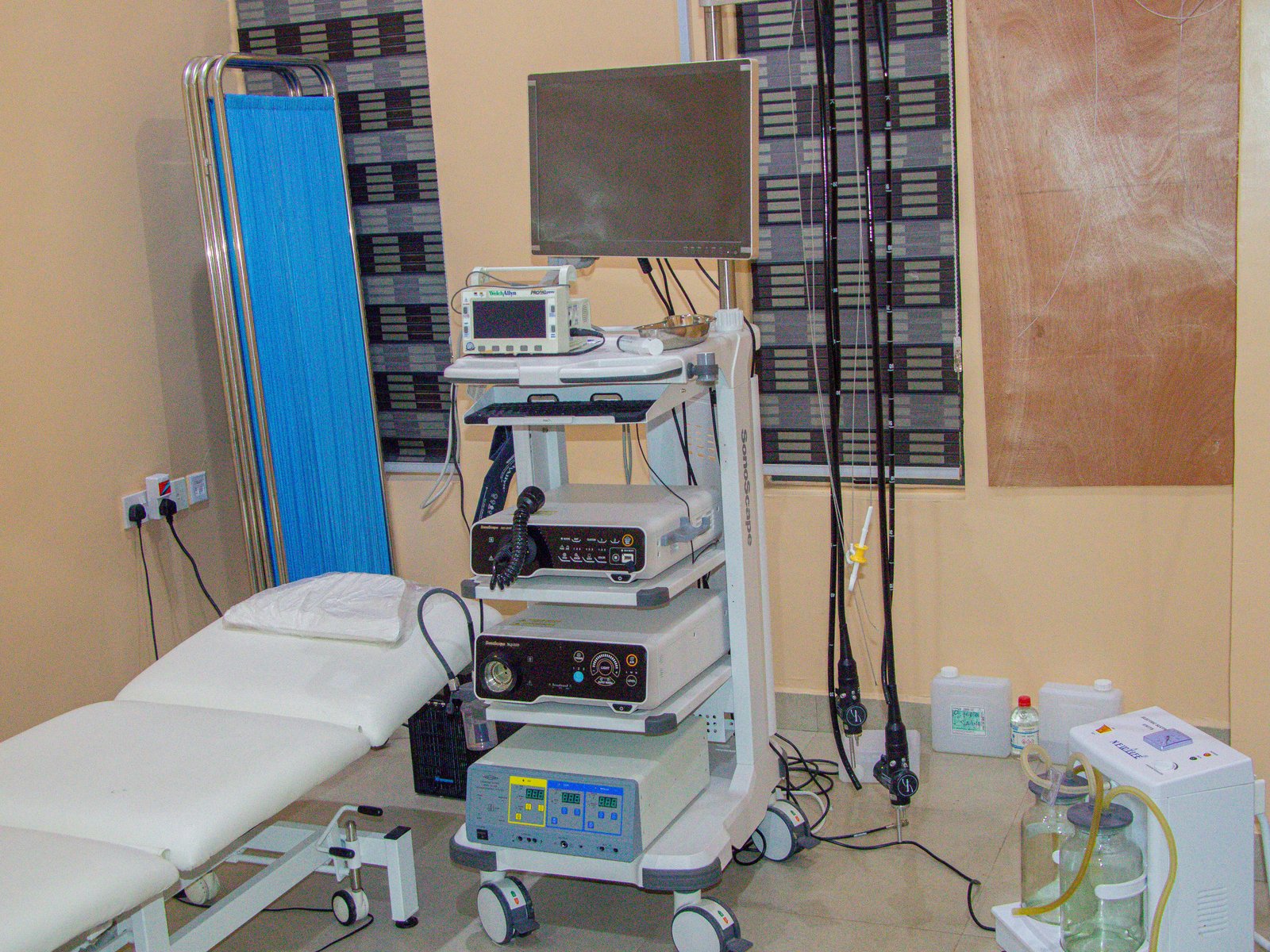
Nasendoscopy Services in Owerri
Detailed Examination of the Nose, Throat and Upper Airway
Persistent nasal blockage, throat discomfort, voice changes, swallowing difficulties and other upper-airway symptoms can sometimes require a closer examination than a routine physical assessment can provide.
Nasendoscopy is a specialized examination that allows a healthcare professional to look inside the nose, back of the nasal passages, throat and other areas of the upper airway using a thin viewing instrument.
At LifeWay Diagnostics in Owerri, nasendoscopy is part of our specialized Interventional Services, providing access to detailed examination of areas that may not be fully visible during a routine external examination.
If you have been referred for a nasendoscopy, our team can help you understand why the examination may have been recommended, how to prepare and what to expect during and after the procedure.
What Is Nasendoscopy?
Nasendoscopy, also known as nasal endoscopy or flexible nasendoscopy, is a procedure used to examine the inside of the nose and upper airway.
A thin endoscope containing a light and camera is carefully passed through the nostril. The healthcare professional can then view the internal structures on a screen.
Depending on the clinical reason for the examination, the procedure may allow assessment of areas including:
Nasal passages
Nasal cavity
Back of the nose
Nasopharynx
Throat
Upper airway
Structures involved in voice and swallowing
The exact areas examined depend on the patient’s symptoms and the purpose of the examination.
Why Might a Doctor Recommend Nasendoscopy?
A healthcare professional may recommend nasendoscopy when symptoms involving the nose, throat or upper airway need closer investigation.
Possible reasons include:
Persistent nasal blockage
Difficulty breathing through the nose
Recurrent nasal symptoms
Persistent throat discomfort
Changes in the voice
Hoarseness
Difficulty swallowing
A sensation of something being stuck in the throat
Persistent throat clearing
Unexplained upper-airway symptoms
Symptoms that have not improved with initial treatment
Further assessment following another examination
A nasendoscopy may also be used when a doctor needs to directly examine structures that cannot be adequately assessed from outside the body.
What Can Nasendoscopy Examine?
One of the major advantages of nasendoscopy is that it allows the healthcare professional to see internal structures directly.
Depending on the examination, the clinician may assess the:
Nasal Passages
The examination can provide a closer view of the internal nasal passages and help identify visible abnormalities that may contribute to nasal symptoms.
Nasopharynx
The nasopharynx is the upper part of the throat located behind the nose.
Nasendoscopy can allow this area to be examined directly.
Throat
The scope can provide views of relevant areas of the throat and help the clinician investigate symptoms such as persistent throat discomfort or swallowing problems.
Upper Airway
The procedure may also allow examination of structures involved in breathing, voice and swallowing, depending on the scope and clinical examination required.
Symptoms That May Require Nasendoscopy
You may be referred for nasendoscopy if you experience persistent or unexplained symptoms involving your nose, throat or upper airway.
These may include:
Persistent Nasal Blockage
If one or both sides of your nose remain blocked or you experience difficulty breathing through your nose, further examination may be appropriate.
Persistent Throat Symptoms
Ongoing throat discomfort, irritation or unusual sensations may require further assessment.
Voice Changes
Persistent hoarseness or unexplained changes in your voice may require examination of the throat and structures involved in voice production.
Difficulty Swallowing
If you experience persistent difficulty swallowing, your doctor may recommend further assessment to help determine the possible cause.
Sensation of Something in the Throat
A persistent sensation of a lump or something being present in the throat may sometimes require examination of the upper airway.
Unexplained Upper-Airway Symptoms
When symptoms persist without an obvious explanation, direct visualization may provide additional information for the healthcare professional.
What Happens During a Nasendoscopy?
A nasendoscopy is generally a relatively straightforward examination.
Your healthcare professional will explain the procedure before it begins.
Step 1: Clinical Assessment
The healthcare professional may ask about:
Your symptoms
How long you have had them
Previous treatments
Existing medical conditions
Previous procedures
Current medications
Known allergies
Other relevant medical information
This helps determine the purpose of the examination.
Step 2: Preparation
You will be positioned comfortably for the examination.
Depending on the clinical situation, a local anaesthetic or other medication may be used to improve comfort or reduce sensitivity in the nasal passage.
Your healthcare professional will explain what is planned.
Step 3: Positioning
You will usually remain seated while the examination is performed.
You may be asked to keep your head still and follow simple instructions during the procedure.
Step 4: Introduction of the Scope
A thin endoscope is carefully passed through one nostril.
The instrument is designed to allow the healthcare professional to view the relevant internal structures.
Step 5: Examination
The clinician guides the scope while viewing the images on a monitor.
You may be asked to:
Breathe normally
Swallow
Speak
Make certain sounds
These instructions can help the healthcare professional observe relevant structures and their movement.
Step 6: Completion
The scope is carefully removed after the examination is complete.
The healthcare professional may then discuss the initial observations and explain whether further investigations or follow-up are required.
Is Nasendoscopy Painful?
Nasendoscopy is generally well tolerated, although some people may experience temporary discomfort.
You may feel:
Pressure in the nose
A sensation of something passing through the nasal passage
Mild irritation
A temporary urge to sneeze
Watery eyes
A sensation of gagging when the scope reaches the throat
If local anaesthetic is used, it can help reduce discomfort during the examination.
If you are anxious about the procedure, tell the healthcare professional before the examination begins.
How Long Does Nasendoscopy Take?
The examination itself is generally relatively quick.
However, the total appointment time can vary depending on:
The reason for the examination
The areas that need to be assessed
Preparation required
Whether local anaesthetic is used
Whether additional examinations are performed
Your healthcare team can provide more specific information about your appointment.
Do I Need to Prepare for Nasendoscopy?
In many cases, extensive preparation is not required.
However, your healthcare provider may give you specific instructions depending on the type of examination being performed.
Before your appointment, inform the healthcare team about:
Current medications
Known allergies
Existing medical conditions
Previous reactions to local anaesthetic
Previous nasal or throat procedures
Any relevant medical history
Follow any instructions provided by the clinical team.
Can I Eat Before a Nasendoscopy?
Preparation requirements can vary.
Unlike some gastrointestinal procedures, nasendoscopy does not always require prolonged fasting. However, your healthcare provider may give you specific instructions depending on the examination and whether additional procedures are planned.
Follow the instructions given to you by the healthcare team rather than assuming that fasting is or is not required.
Is Nasendoscopy Safe?
Nasendoscopy is generally considered a safe procedure when performed appropriately by trained healthcare professionals.
Because the examination involves passing an instrument through the nasal passage, temporary irritation or minor discomfort can occur.
Possible temporary effects may include:
Sneezing
Watery eyes
Mild nasal irritation
Mild throat irritation
Minor nose bleeding
More significant complications are uncommon, but the risks can vary depending on the individual and the procedure performed.
Your healthcare professional should explain any relevant risks before the examination.
Can Nasendoscopy Cause Nose Bleeding?
Minor nasal bleeding can occasionally occur because the scope passes through the nasal passage.
If you have a history of frequent nosebleeds, nasal problems or conditions affecting blood clotting, tell the healthcare professional before the examination.
Significant or persistent bleeding after the procedure should receive medical attention.
Can Children Have a Nasendoscopy?
Nasendoscopy may be performed in children when clinically appropriate.
The approach depends on:
The child’s age
Symptoms
Ability to cooperate
Reason for the examination
Clinical assessment
The healthcare professional will determine whether the examination is appropriate and how best to perform it.
Can Nasendoscopy Be Used to Examine the Throat?
Yes.
Depending on the type of scope and examination required, nasendoscopy can provide views of parts of the throat and upper airway.
This can be useful when investigating symptoms involving:
Voice
Swallowing
Throat discomfort
Upper-airway function
Persistent throat symptoms
The exact structures that can be examined depend on the procedure and clinical circumstances.
Nasendoscopy for Voice and Hoarseness
Your voice depends on the coordinated movement of structures within the throat and upper airway.
Persistent or unexplained changes in the voice may sometimes require direct visualization.
Nasendoscopy can allow a healthcare professional to examine relevant structures while you speak or make specific sounds.
This can provide information that may not be available from an external examination alone.
If you have persistent hoarseness or unexplained voice changes, discuss the symptoms with an appropriate healthcare professional.
Nasendoscopy for Swallowing Problems
Swallowing involves coordinated movement of multiple structures.
When a patient has persistent difficulty swallowing, a healthcare professional may recommend further examination to understand what may be contributing to the symptoms.
Nasendoscopy can provide visual information about relevant structures and their movement during certain parts of the examination.
It is one of several possible investigations that may be considered depending on the patient’s symptoms.
What Happens After Nasendoscopy?
Most patients can resume normal activities after a straightforward nasendoscopy, depending on the specific procedure and any medication used.
You may temporarily experience:
Mild nasal irritation
Mild throat discomfort
Sneezing
Watery eyes
Temporary numbness if local anaesthetic was used
If local anaesthetic has been applied to the throat, you may receive instructions about eating and drinking until normal sensation returns.
Always follow the instructions provided by your healthcare professional.
When Should I Seek Medical Attention After Nasendoscopy?
Most people experience little more than temporary discomfort.
However, seek medical attention if you develop concerning symptoms such as:
Significant or persistent nose bleeding
Difficulty breathing
Severe or worsening pain
Severe swelling
Persistent difficulty swallowing
Fainting
Other serious or unexpected symptoms
If you are concerned about any symptom after your procedure, contact a healthcare professional.
What Can Nasendoscopy Show?
Nasendoscopy provides direct visual information about the structures examined.
Depending on the examination, it may help a healthcare professional identify or investigate:
Visible inflammation
Nasal abnormalities
Structural changes
Throat abnormalities
Upper-airway changes
Areas requiring further investigation
Changes associated with voice or swallowing symptoms
However, not every condition can be diagnosed through nasendoscopy alone.
The findings need to be considered alongside your symptoms, medical history, physical examination and any additional tests that may be required.
Does Nasendoscopy Diagnose Cancer?
Nasendoscopy can allow a healthcare professional to directly examine areas of the nose and throat for visible abnormalities that may require further investigation.
However, seeing an abnormal area does not automatically mean that cancer is present.
If a suspicious area requires further evaluation, additional investigations may be recommended. Depending on the situation, this may include tissue sampling and laboratory examination.
A cancer diagnosis requires appropriate clinical and pathological assessment.
Nasendoscopy vs Other Diagnostic Tests
Different tests provide different types of information.
Nasendoscopy vs CT Scan
A CT scan uses X-rays to create detailed cross-sectional images of internal structures.
Nasendoscopy provides direct visual examination of the inside of the nose, throat and upper airway.
A doctor may recommend one or both depending on the clinical question.
Nasendoscopy vs MRI
MRI uses magnetic fields and radio waves to create detailed images of tissues.
Nasendoscopy allows direct visualization of accessible internal structures.
They are complementary rather than interchangeable examinations.
Nasendoscopy vs Routine Physical Examination
A routine examination may allow a doctor to inspect the mouth, nose and throat externally.
Nasendoscopy can provide a closer view of internal areas that cannot be adequately seen during a standard examination.
Why Choose LifeWay Diagnostics for Nasendoscopy in Owerri?
Patient-Focused Approach
We understand that having an instrument passed through the nose can make some patients anxious.
Our approach is to explain the examination clearly and help you understand what to expect.
Specialized Interventional Services
Nasendoscopy is part of LifeWay Diagnostics’ broader range of Interventional Services, alongside Endoscopy and Hemodialysis.
Integrated Diagnostic Services
LifeWay Diagnostics provides a broad range of laboratory, imaging, clinical physiology and interventional services.
This means patients can access different investigations through one diagnostic centre when clinically appropriate.
Clear Communication
We believe patients should understand why a procedure has been recommended and what information it is intended to provide.
Convenient Access in Owerri
LifeWay Diagnostics provides specialized diagnostic services for patients in Owerri and surrounding communities.
Who May Be Referred for Nasendoscopy?
Nasendoscopy may be considered for patients experiencing:
Persistent nasal obstruction
Unexplained nasal symptoms
Persistent throat discomfort
Hoarseness
Voice changes
Difficulty swallowing
Persistent throat clearing
A sensation of something in the throat
Other unexplained upper-airway symptoms
The decision to perform a nasendoscopy should be based on an appropriate clinical assessment.
Frequently Asked Questions About Nasendoscopy in Owerri
What is nasendoscopy?
Nasendoscopy is a specialized examination that uses a thin endoscope to examine the inside of the nose, back of the nasal passages, throat and relevant areas of the upper airway.
Is nasendoscopy painful?
It is generally well tolerated, although you may experience temporary pressure, irritation, sneezing or a gagging sensation. Local anaesthetic may be used where appropriate.
How long does a nasendoscopy take?
The examination is generally relatively quick, but the total appointment time depends on preparation and the type of examination required.
Do I need to fast before nasendoscopy?
Not every nasendoscopy requires fasting. Preparation depends on the specific examination and clinical circumstances. Follow the instructions given by your healthcare provider.
Can I eat after nasendoscopy?
If local anaesthetic has been used in the throat, you may be instructed to wait until normal sensation returns before eating or drinking. Follow the instructions provided after your examination.
Can nasendoscopy examine the throat?
Yes. Depending on the examination, nasendoscopy can provide views of relevant structures within the throat and upper airway.
Can nasendoscopy examine the vocal cords?
Depending on the type of examination and scope used, a healthcare professional may be able to assess structures involved in voice production, including the vocal cords.
Can nasendoscopy find the cause of nasal blockage?
It can provide direct visual information about the nasal passages and may help identify structural or visible abnormalities that could contribute to nasal symptoms. Further testing may sometimes be required.
Can children undergo nasendoscopy?
Yes, when clinically appropriate. The suitability of the examination depends on the child’s age, symptoms and ability to cooperate.
Can nasendoscopy detect cancer?
Nasendoscopy can identify visible abnormalities that may require further investigation, but it does not by itself confirm cancer. Additional assessment and, where appropriate, tissue examination may be required.
Do I need a referral for nasendoscopy?
Referral requirements may depend on the clinical circumstances and service arrangements. Contact LifeWay Diagnostics if you are unsure whether you require a referral.
Looking for Nasendoscopy Services in Owerri?
If you have persistent nasal, throat, voice or upper-airway symptoms and your doctor has recommended further examination, LifeWay Diagnostics in Owerri provides specialized nasendoscopy services as part of its Interventional Services.
Our team can help you understand the procedure, preparation requirements and next steps.